Honest ClickFunnels Review (2026) – Features, Pricing, Pros, Cons & Is It Worth It?

ClickFunnels positions itself as a platform that allows anyone to create high-converting sales funnels that turn visitors into customers around the clock — without hiring developers or managing complicated tech setups.

That’s the promise.

But does it actually deliver? And more importantly, is it worth the price?

In this updated ClickFunnels review for 2026, I’ll break down exactly how it works, what you get for your money, where it performs well, and where it may fall short. The goal is simple — to help you make a clear, informed decision before investing.

If you’re serious about growing and scaling an online business, ClickFunnels can be a powerful tool. However, it’s not for everyone. There are important details you should understand before spending hundreds of dollars on a subscription.

I’ve seen entrepreneurs jump in too quickly and regret it later after wasting $300+ without a clear strategy.

This review will make sure you don’t make the same mistake.

clickfunnels

ClickFunnels – Why So Much Love… and So Much Criticism?

ClickFunnels is arguably one of the most well-known sales funnel platforms in the online marketing space. But with that level of popularity comes something interesting — strong opinions on both sides.

So why does it receive so much criticism online?

Is the backlash justified?
Is ClickFunnels genuinely effective, or simply overhyped marketing?
And the big question some people even ask — is it a scam?

If you’re researching the platform right now, you’re probably feeling overwhelmed. There’s a flood of mixed opinions out there. Because ClickFunnels is such a major player in the industry, countless bloggers, YouTubers, and affiliates have published their own reviews.

Unfortunately, not all of them are unbiased.

On one side, you’ll find highly enthusiastic users who credit ClickFunnels for transforming their businesses. For them, it’s more than software — it’s a growth engine that helped them scale revenue, automate sales, and simplify their tech stack, like these people:

On the other side, you’ll also come across aggressive criticism — including negative blog posts and YouTube videos that portray ClickFunnels in a very poor light.

So who should you believe?

Here’s my honest take.

ClickFunnels has played a significant role in helping me scale my online efforts. It simplified the technical side of building funnels and allowed me to focus more on strategy and conversions. And considering the large user base worldwide, it’s clear that many businesses find value in it.

That said, it’s important to understand something:

ClickFunnels is not magic software.

It works exceptionally well when:

You actually need structured sales funnels

You have a clear offer

You understand basic marketing principles

You know how to drive traffic

If those pieces are missing, even the best software won’t produce results.

That’s why instead of blindly recommending it, I suggest you go through the features carefully, review the pros and cons objectively, and look at the pricing breakdown in detail. Once you understand what you’re paying for and how it fits your business model, the decision becomes much easier.

Now, let’s dive deeper and break everything down step by step.

ClickFunnels is a platform designed to make building sales funnels simple and structured. In essence, it helps entrepreneurs attract the right audience, capture leads, and convert those leads into paying customers through a guided step-by-step process.

What makes it stand out from many competitors is its all-in-one approach. Instead of using separate tools for landing pages, checkout systems, email follow-ups, and automation, ClickFunnels brings everything together under one roof.

The goal is very clear:

  • Drive targeted traffic
  • Capture contact information
  • Present an offer
  • Convert visitors into buyers
  • Follow up automatically

When set up correctly, this entire system can run on autopilot. That means your funnels can continue generating leads and sales around the clock — whether you’re working, traveling, or completely offline.

In theory, it becomes a self-sustaining sales engine that works 24/7.

Of course, the key phrase there is “when set up correctly.” The software provides the structure — but strategy and execution still determine the results.

What’s the Difference Between a Sales Funnel and a Traditional Website?

A traditional website is essentially an online brochure for your business. It contains information about your company, your services, maybe a blog, contact details, and a few product pages.

Visitors can browse freely.

They can click anywhere, navigate between pages, read content — or leave without taking any action.

In simple terms, a website is built for exploration.

A sales funnel, on the other hand, is built for conversion.

Instead of giving visitors unlimited options, a funnel guides them through a specific, carefully structured path. Every step is designed with one goal in mind — moving the visitor closer to a decision.

Think of it this way:

A website is like a physical store where customers walk in and look around on their own.

A sales funnel is like having a highly trained salesperson who:

  • Identifies the right prospects
  • Understands their needs
  • Presents the exact solution
  • Builds trust step by step
  • And confidently closes the sale

And unlike a human salesperson, this system works 24/7 — consistently, without breaks.

That’s the fundamental difference.

Websites provide information.
Funnels drive action.

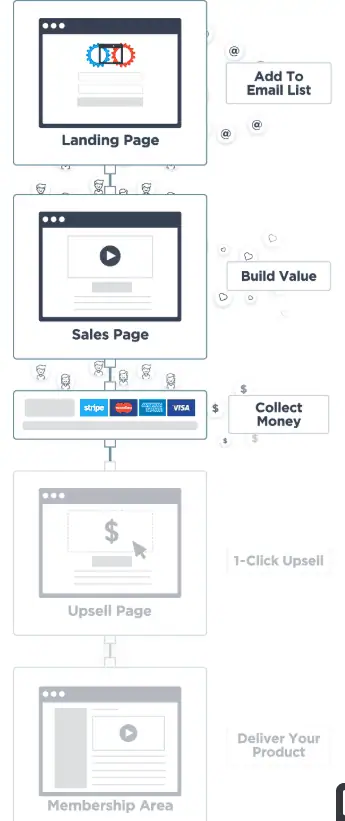
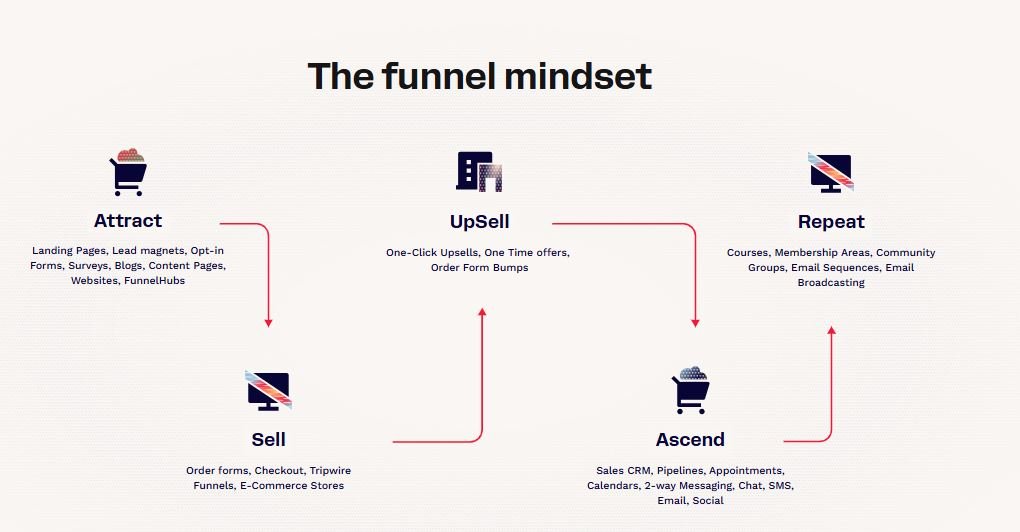
Sales funnels typically follow a structured flow like the one shown below

what-is-a-sales-funnel

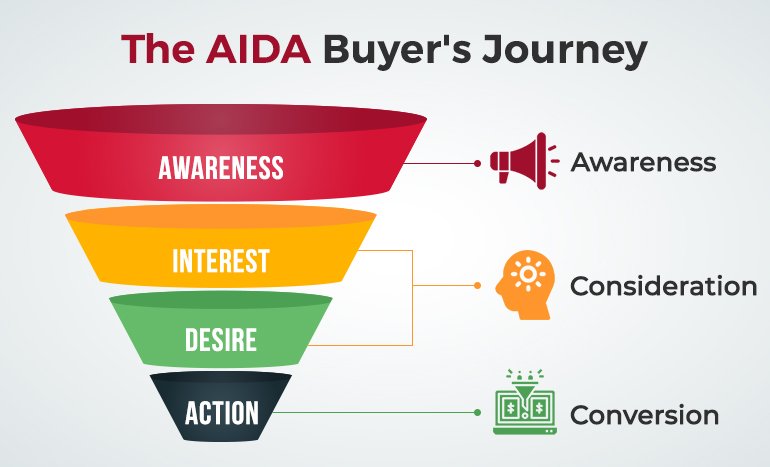
Steps of a high converting sales funnel:

aida saes funnel

At its core, a sales funnel is simply a structured marketing campaign made up of multiple steps. Each step is strategically designed to move the potential customer closer to the next stage in the buying process.

Instead of asking for a big commitment upfront, the funnel breaks the buyer’s journey into smaller, logical, and easy-to-follow actions. This gradual progression builds trust, reduces friction, and increases the likelihood that a visitor eventually becomes a paying customer.

By guiding prospects step by step, you remove confusion and make the decision-making process feel natural rather than forced.

Still following along?

Great — because now we’re getting to the important part.

Why Use a Sales Funnel? Can’t You Just Run Ads?

Now that you understand the funnel concept, let’s address a common question:

Why not just run ads directly to a sales page and hope for conversions?

Technically, you can.

But that approach assumes that a complete stranger is ready to make an immediate buying decision the moment they see your offer.

That rarely happens.

Sales funnels are often visualized as inverted pyramids. At the top, you attract a large audience. As people move through each stage — opting in, engaging, considering the offer — some drop off. What remains at the bottom are the prospects who are genuinely interested and more likely to convert.

If you simply push an ad and ask for a purchase right away, you’re demanding a high level of trust upfront.

That’s a big ask.

Think of it like building a relationship. You wouldn’t propose to someone the first time you meet them. There’s a process — conversations, trust-building, shared experiences, and gradual commitment.

Marketing works the same way.

When you guide potential customers through a structured funnel — providing value, answering objections, and building credibility — you significantly increase the chances that they’ll say yes when you present the offer.

In short, ads can bring attention.
Funnels turn attention into conversions

How Does ClickFunnels Make Building Sales Funnels Easier?

We’ll go much deeper into specific features shortly, but here’s the high-level idea.

Before platforms like ClickFunnels existed, building a proper sales funnel was complicated. You typically needed:

  • A developer to build pages

  • A designer for layout and branding

  • A copywriter for messaging

  • Multiple software tools connected together

  • Technical knowledge to integrate everything properly

Each page had to be built separately and manually linked together. Even small changes required technical adjustments.

That process was expensive, slow, and often overwhelming for small business owners.

ClickFunnels changed that model.

The platform was designed to simplify funnel creation so that even someone with basic internet skills could build a structured sales system. If you can navigate social media or edit a simple webpage, you can learn to build funnels inside ClickFunnels.

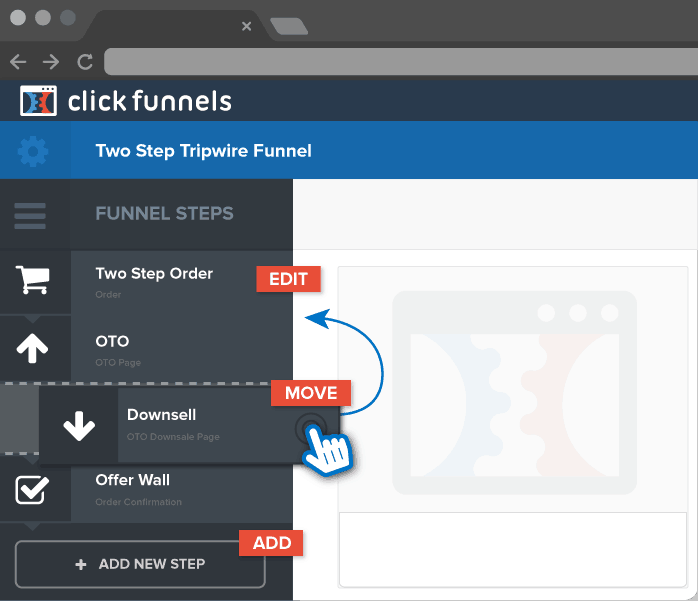
Here’s how it simplifies the process:

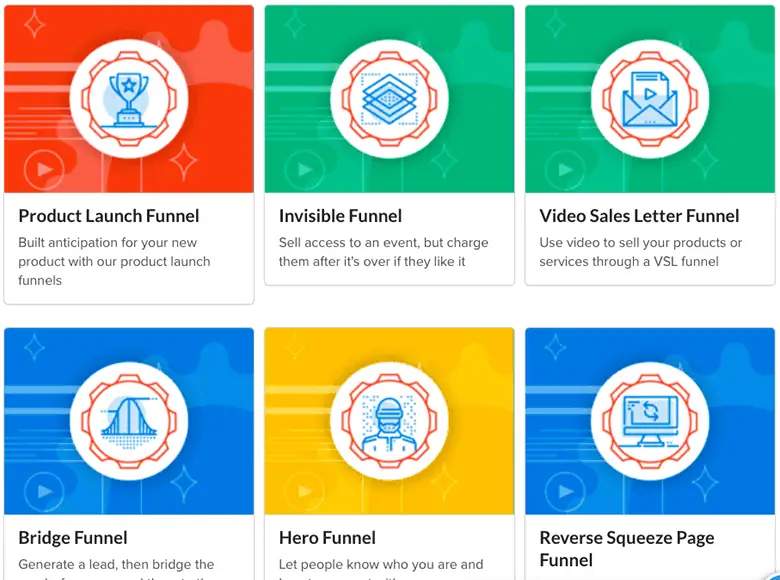
  • Pre-built funnel templates based on common marketing goals

  • A drag-and-drop visual editor

  • Built-in landing page builder

  • Email integration with major autoresponders

  • Step-by-step funnel flow structure

Instead of piecing together five different tools, everything is organized in one dashboard.

In theory, this gives you everything required to:

  • Guide visitors step by step through a sales journey

  • Present the right offer at the right time

  • Capture leads automatically

  • Follow up even if someone leaves without purchasing

On paper, it sounds like the perfect system.

So why is there still so much debate around it?
Is it truly that legit — or is it just clever marketing?

Here’s my honest perspective…

Is ClickFunnels Legit?

Short answer: Yes, ClickFunnels is a legitimate company and software platform.

At its core, every online business needs a system to:

  • Attract visitors

  • Educate and nurture them

  • Present offers

  • Convert them into customers

  • Follow up — whether they buy immediately or not

That’s exactly the type of structured process ClickFunnels is built to support.

The platform has a large global user base, with thousands of entrepreneurs, marketers, and businesses actively using it. Its widespread adoption alone indicates that it’s a real, functioning product — not some fly-by-night operation.

It was founded by Russell Brunson, a well-known figure in the online marketing space. He has authored multiple books on sales funnels and marketing strategy, and has built a strong presence within the digital business community.

Another important point: ClickFunnels offers a 14-day free trial. That gives users the opportunity to test the platform before committing financially. Scam companies typically don’t provide transparent trials tied to established payment systems.

Now, that doesn’t mean ClickFunnels is perfect. It’s not necessarily the best solution for every business, and it may not suit every budget or strategy.

But in terms of legitimacy? It’s a real company, with real users, delivering a real software product that has been widely recognized in the online business world.

With that clarified, let’s move forward.

ClickFunnels Features – What Really Stands Out?

It’s honestly difficult to stay completely neutral when discussing ClickFunnels’ feature set.

There are “standard features”… and then there are fully integrated, business-grade systems. ClickFunnels leans toward the latter.

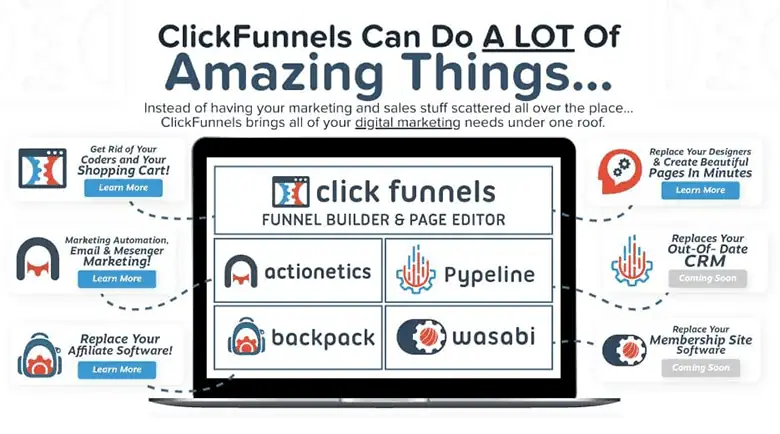
The platform consolidates multiple marketing tools into one ecosystem. Instead of juggling separate software for landing pages, sales pages, email follow-ups, and funnel logic, everything is managed within a single dashboard.

Yes, the pricing reflects that all-in-one approach. And like any large platform, you may occasionally encounter minor bugs or small limitations. But overall, it feels less like a single tool and more like having a simplified digital marketing system bundled together.

Now, let’s break down the most important aspects.

Usability & User Experience (UX)

One of ClickFunnels’ strongest advantages is ease of use.

From the moment you log into your account, the interface feels structured and guided. The dashboard clearly shows your funnels, steps, and analytics without overwhelming you with technical clutter.

To make the platform beginner-friendly, some advanced customization options are intentionally simplified. While this can occasionally limit flexibility for highly technical users, it significantly lowers the learning curve for most entrepreneurs.

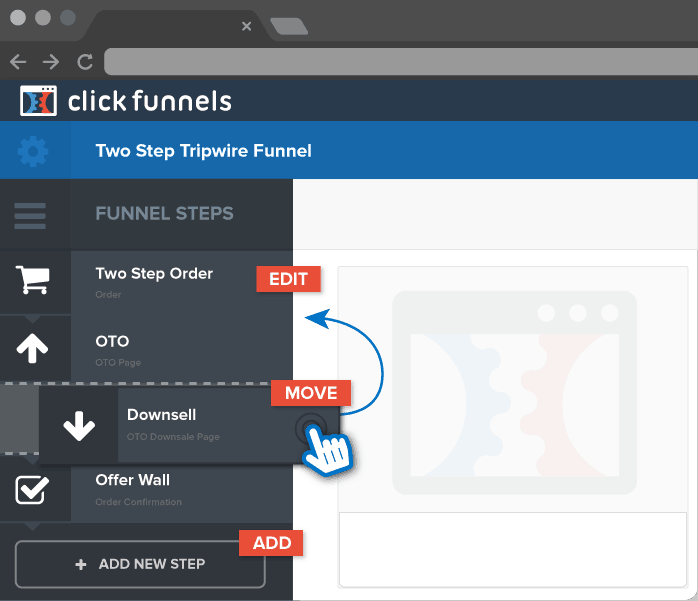
The funnel builder itself uses a clean, visual drag-and-drop interface. Pages are organized step by step, making it easy to understand how visitors move from one stage to the next.

In short, it’s designed for marketers — not developers.

Even someone with basic web experience can navigate the builder without much friction. The layout is modern, intuitive, and structured in a way that reduces the chance of breaking something accidentally.

Up next, we’ll look at how the page builder actually performs in practice.

Building landing pages inside ClickFunnels is just as simple.

You simply select elements from the built-in library — such as headlines, images, buttons, forms, videos, countdown timers, and more — and drag them into pre-structured sections on the page. The layout system guides where elements can be placed, keeping designs organized and conversion-focused.

Within minutes, you can go from a blank template to a fully functional landing page.

What makes this especially helpful is that you don’t need design experience to create something that looks professional. The templates and structure do most of the heavy lifting.

Even someone with minimal artistic ability can take a basic layout and turn it into a clean, modern, conversion-ready page without touching a single line of code.

Into something like this:

Okay, full disclosure — I didn’t exactly design that masterpiece from scratch.

But that’s not the point.

The point is how easy it is to create something that looks clean, structured, and professional without being a designer.

Point proven.

When it comes to user experience, ClickFunnels genuinely stands out.

The interface is intuitive. The layout makes sense. The drag-and-drop builder responds smoothly. And most importantly — you don’t feel lost while building.

For beginners especially, that matters a lot.

In my experience, very few funnel tools make the process this straightforward. Many platforms either overwhelm you with too many settings or restrict you so much that customization becomes frustrating.

ClickFunnels strikes a balance.

For new funnel or landing page builders, it’s easily one of the most accessible platforms available.

Is it perfect? No.

But in terms of usability and ease of setup, it’s hard to beat.

In case the name didn’t already make it obvious — ClickFunnels is built specifically for creating sales funnels.

That’s what attracted me to the platform in the first place. And if you’re reading this review, chances are that’s exactly what you’re interested in too.

Beyond the marketing claims, here’s the honest truth:

You actually can build functional sales funnels without needing serious technical skills.

The funnel builder walks you through the process step by step. You choose a goal (lead generation, product sales, webinar, etc.), pick a template, and the system automatically creates the funnel structure for you.

From there, it’s just customization.

No coding. No complex integrations to manually stitch together.

Now, let’s be realistic.

Will you build a fully optimized, high-converting funnel in “5 minutes” like some ads suggest? Probably not.

But can you create a clean, working funnel in under an hour — even with minimal tech experience?

Yes. Absolutely.

And when you think about it, spending an hour building a system that could potentially generate leads and sales 24/7 isn’t a bad trade-off at all.

That’s the real appeal of the funnel builder.

Here’s How it Works

First, you tell the tool why you need this sales funnel.

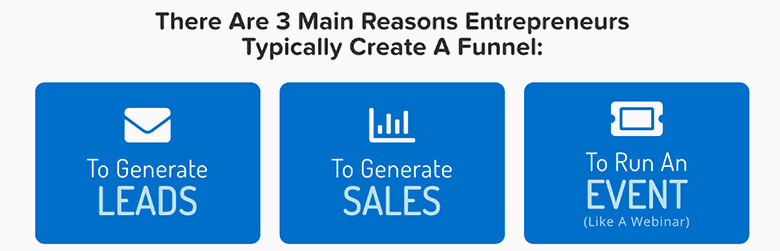
Inside the Funnel Builder, you’ll notice that ClickFunnels organizes everything based on your end goal.

Instead of starting from scratch, you simply choose what you want to achieve.

1️⃣ Generate Leads

If your goal is to collect names, phone numbers, or email addresses, you select a lead generation funnel.

ClickFunnels automatically creates the required pages — usually an opt-in page and a thank-you page — all structured to capture contact information and send it directly to your connected email marketing software.

2️⃣ Generate Sales

If you want to sell a product, things get more interesting.

Whether it’s:

  • A low-ticket offer

  • A longer-form sales page for higher-priced products

  • A product launch

  • A video sales letter

ClickFunnels provides pre-built templates designed around those goals.

You’re not guessing what pages to create — the structure is already mapped out. You simply customize the copy, visuals, and offer details.

That’s where a lot of the value comes in. Instead of building everything from scratch, you’re plugging your offer into a proven framework.

3️⃣ Online Events (Webinars)

There are also funnel options specifically for webinars.

You can:

  • Host webinars using third-party tools

  • Or set up automated (evergreen) webinar funnels inside ClickFunnels

For beginners, this might not be necessary right away — but it’s useful once you start scaling.

The key takeaway?

You choose your objective, and ClickFunnels automatically generates all the required pages to support that goal.

It’s essentially an instant sales framework.

Is it flawless? No.

Advanced marketers will usually tweak layouts, improve copy, and optimize the structure further.

But for the majority of users, this approach saves:

  • Hours of setup time

  • Thousands of dollars in separate tools

  • The headache of trying to connect everything manually

From there, you can customize and refine the funnel however you like.

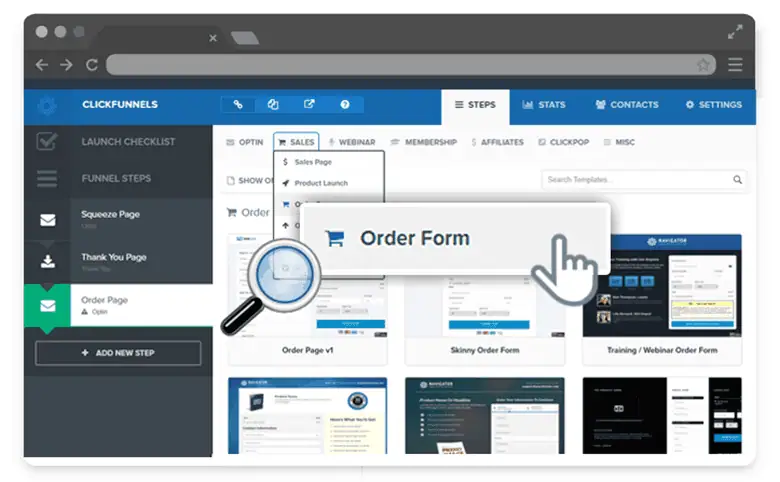
You can even create simple order forms to reduce cart abandonment:

I don’t want this to come across like a full-blown ClickFunnels sales pitch

But it’s genuinely hard not to be impressed by the funnel builder.

It’s that good.

The structure, the simplicity, and the speed at which you can go from idea to live funnel make a real difference — especially if you’ve ever tried building funnels manually with multiple tools.

You log in, choose your goal, customize a template, connect your integrations, and you’re up and running.

No complicated setup. No endless tech frustration.

For what it’s designed to do, the funnel builder delivers.

ClickFunnels Landing Pages

Landing pages are the individual steps inside your funnel, each built with a specific purpose.

This is where you collect contact details — emails, phone numbers, and other relevant information. Or, ideally, this is where you close the sale.

Every landing page exists for one reason: action.

ClickFunnels makes building these pages extremely straightforward. With pre-designed templates and a drag-and-drop editor, you can create clean, professional-looking pages without design or coding experience.

Noticing a theme here? Simplicity.

When I first started in online business, my landing pages were extremely basic — just a strong headline, some persuasive copy, and a simple opt-in form. Even that minimal setup significantly improved my conversion rates.

What surprised me most was how little technical effort it required.

You don’t need to rely on designers, developers, or expensive freelancers just to get a functional page live. That independence alone is a big win for small business owners.

Templates

If you’re thinking, “I don’t even know what a good landing page should look like,” don’t worry.

That’s exactly why templates exist.

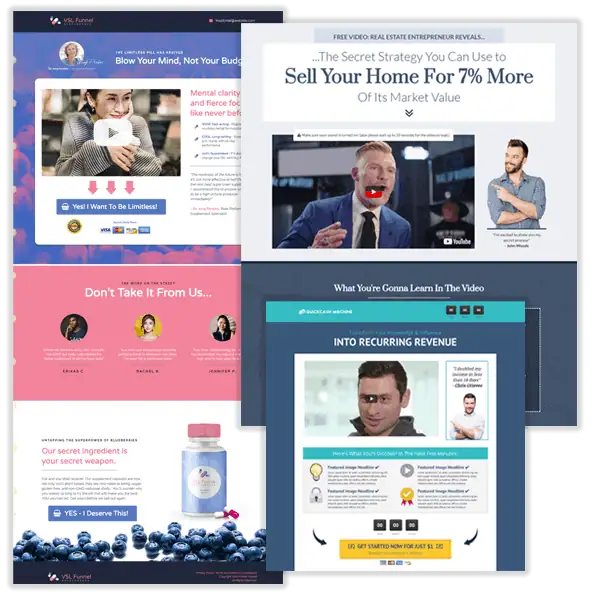
ClickFunnels provides a wide range of pre-built, conversion-focused templates that are already structured based on proven marketing principles.

You simply:

  • Choose a template

  • Customize the text, images, and branding

  • Place it into your funnel

  • Done

There are templates available for:

  • Lead capture pages

  • Sales pages

  • Upsell and downsell pages

  • Event and webinar pages

  • Membership sites

The idea isn’t to reinvent the wheel. It’s to start with a proven framework and tailor it to your offer.

For beginners especially, that shortcut can save a huge amount of time — and costly trial-and-error.

The company states that these templates are tested and optimized for conversions — and overall, I’d say that’s accurate. They’re structured around proven marketing principles and generally follow layouts that are known to work.

That said, after using them for a long time, some designs can start to feel a bit familiar or repetitive. But that’s more about exposure than effectiveness.

At the end of the day, they do what they’re supposed to do — especially for beginners who need a reliable starting point without overthinking the design process.

You also get built-in A/B testing functionality, which allows you to:

  • Compare different templates

  • Tweak headlines or copy variations

  • Test entire funnel flows against each other

I briefly mentioned the drag-and-drop builder earlier when discussing usability, but let’s break it down in more detail here.

ClickFunnels’ Editor

The drag-and-drop editor gives you a lot of control over how your pages look and feel.

You can click on any section, row, or element and adjust text, spacing, colors, images, buttons — almost everything — without touching code. For most users, that level of customization is more than enough to create polished, conversion-focused pages.

Now, let me be upfront.

ClickFunnels does not have the most advanced landing page editor on the market in terms of pure design flexibility.

There are platforms that offer deeper design control and more granular customization. And as you start pushing into more advanced use cases, you may occasionally notice small bugs or minor interface frustrations. I’ll cover those transparently later, because they’re important to know before making a decision.

That said, when you look at the bigger picture — value for money, ease of use, and how seamlessly it connects with the funnel system — ClickFunnels is still one of the strongest overall options available.

It may not win purely on advanced design capability, but as an all-in-one funnel builder, it’s extremely hard to beat.

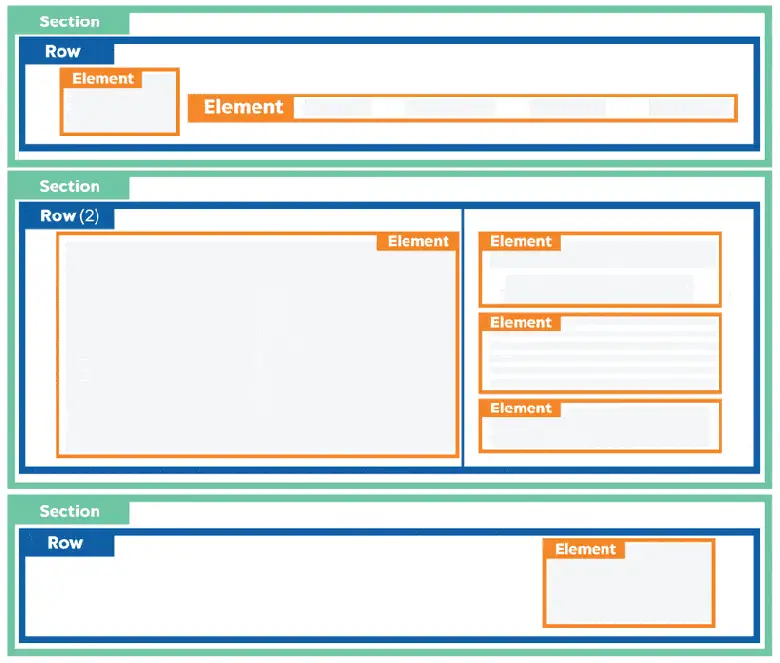
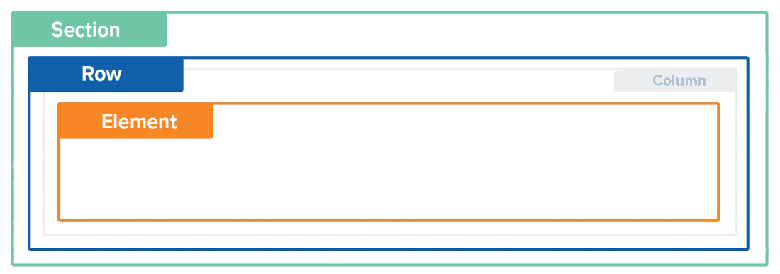
Each page is built with different color-coded blocks like this:

They fit together like this:

SECTIONS are like the structural framework of a house — the foundation, walls, and roof that hold everything together.

ROWS are like the individual rooms inside that house. They divide the space and organize where things will go.

And ELEMENTS? Those are the actual pieces inside each room — your headlines, images, buttons, forms, videos… and yes, the occasional decorative touch that may or may not be necessary.

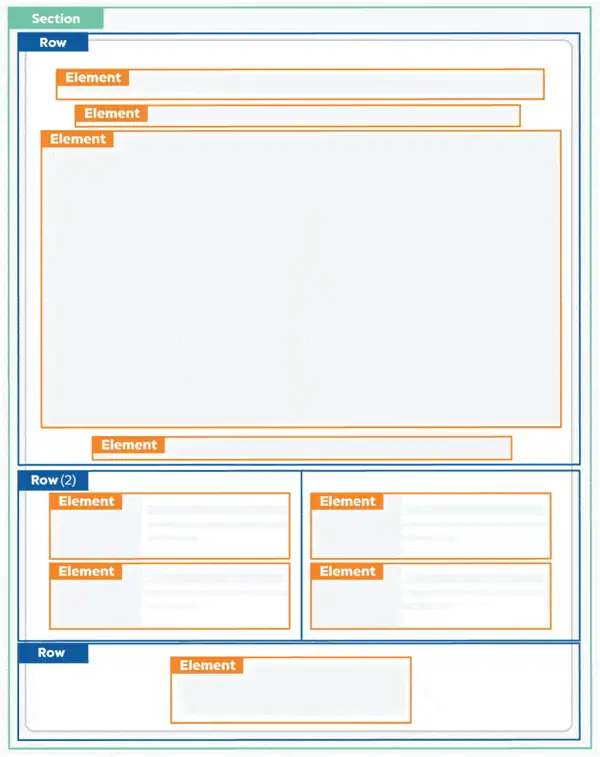
That’s how the builder keeps everything organized. Instead of randomly placing items on a page, you’re working within a clear structure.

This is what a typical landing page skeleton looks like:

Just kidding. Here’s what it’ll really look like:

ClickFunnels is ridiculously easy to use.

If I can build funnels with it, almost anyone can. It honestly feels a bit like paint-by-numbers — the framework is already there, and you’re simply filling in the details.

Most of the heavy lifting is handled for you. The structure, flow, and layout logic are pre-built. Your job is to customize the messaging, visuals, and offer.

And if you’re more technically inclined, you’re not boxed in. You can still inject your own HTML, CSS, or JavaScript to fine-tune things exactly how you want.

Once the structure is set, you just start adding elementsheadlines, images, buttons, forms, countdown timers, videos — there are dozens of options available.

Put it all together, and you’ve got a fully functional landing page ready to go.

But don’t let the structure intimidate you.

At first glance, the layout might look a bit plain or “bare bones.” That’s normal. Once you start adding elements like text, images, videos, buttons, and forms, the page quickly comes to life.

And just like most landing page builders, you’ll typically begin with a pre-designed template. From there, you simply customize it to match your brand, offer, and marketing goals.

The real power shows up when you start layering in additional elements to boost engagement and conversions.

Some of my go-to additions for instantly improving a page include:

  • SMS signup forms for quicker lead capture

  • Short surveys to qualify visitors

  • Progress bars to encourage completion

  • Facebook comment sections for social proof

  • FAQ blocks to handle objections

  • Countdown timers (huge for increasing urgency and conversions)

  • Custom HTML for advanced tweaks

These small enhancements can significantly increase conversion rates without making the page complicated.

The key is starting simple — then optimizing strategically.

FAQ: Are ClickFunnels Pages Mobile-Friendly?

This is a major advantage of using ClickFunnels.

All pages are automatically mobile-responsive.

That means your funnels adjust to smartphones and tablets without you needing to do extra work.

No additional setup. No coding tweaks. It just works.

ClickFunnels Editor Summary

ClickFunnels remains one of my favorite landing page builders and sales funnel tools.

There’s a reason so many respected online marketing experts consistently recommend it.

I can select a pre-built funnel template, customize the pages inside it, and quickly launch a structured sales funnel that runs 24/7 — generating leads and sales in the background.

  • Is it the most advanced page builder on the planet? No.

  • Are the templates the most cutting-edge designs available? Not always.

But when it comes to simplicity, usability, speed, and overall convenience, it’s extremely hard to beat.

You would genuinely have to try to mess this up.

When you combine ease-of-use, professional structure, built-in funnel logic, and functionality, ClickFunnels stands out as one of the strongest all-in-one solutions available — even considering its minor limitations.

Clickfunnels Integrations

I won’t go too deep into integrations here — you can always connect additional tools as your business grows.

ClickFunnels integrates with SMS platforms, email marketing software, payment gateways, webinar tools, CRMs, and other marketing systems you may already be using.

The basic idea is simple:

Capture leads → Let your funnel do the heavy lifting → Follow up using your marketing tools → Generate revenue.

That’s the flow.

Some of the most commonly used integrations include:

  • ActiveCampaign

  • Actionetics (ClickFunnels’ native email tool)

  • Constant Contact

  • Drip

  • EverWebinar

  • Facebook

  • HubSpot

  • Mailchimp

  • Salesforce

  • Twilio

  • Zapier

  • Stripe

  • Shopify

In my experience, these integrations run smoothly and don’t require complex setup.

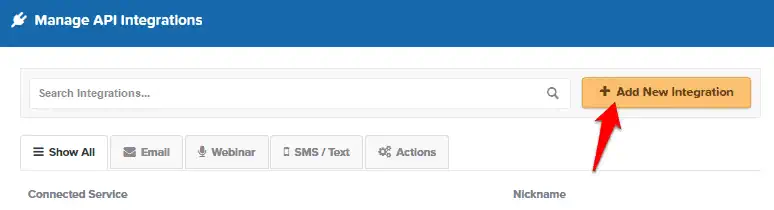
Connecting them is usually as simple as navigating to your dashboard and clicking the very obvious button labeled — and pay close attention here — “ADD NEW INTEGRATION.”

Yes, it’s that straightforward.

Once connected, your funnels can automatically send leads to your email list, process payments, trigger SMS follow-ups, sync data with your CRM, and more — without manual work.

That’s where ClickFunnels starts feeling less like a page builder and more like a central marketing hub.

FAQ: Does ClickFunnels Have Autoresponders?

Yes.

Autoresponders are built into the email follow-up system, allowing you to automatically send emails based on user actions inside your funnel.

So if someone opts in, buys a product, or abandons a page — you can trigger automated sequences accordingly.


The Rest of ClickFunnels Features

I’m grouping the remaining features together because funnels, landing pages, and integrations are the core marketing tools.

Everything else? Think of it as a bonus layer on top.

Not necessary for everyone — but definitely nice to have.


Share Funnels

This might be my favorite bonus feature.

Anything that has the potential to generate revenue without extra thinking or rebuilding from scratch automatically gets my attention.

Share Funnels allows you to duplicate entire funnels from another ClickFunnels account directly into your own.

That means if someone shares a high-performing funnel with you, you can import the exact structurepages, flow, layout — instantly.

No rebuilding. No guesswork.

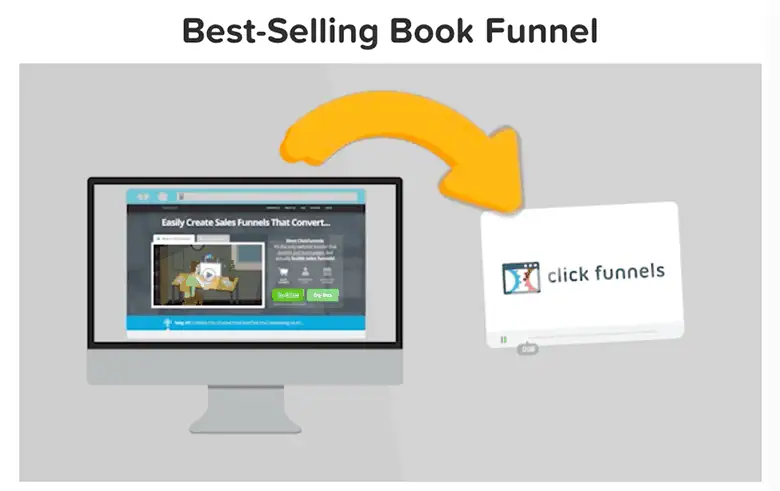
For example, let’s say someone created a funnel that successfully sells an ebook. If they share that funnel link with you, you can duplicate it, customize the content for your own ebook, and launch much faster than starting from zero.

Like this:

ClickFunnels Actionetics

Actionetics is ClickFunnels’ built-in email marketing tool.

It allows you to connect with subscribers, send automated follow-up sequences, deliver digital products, and guide people toward the next step inside your funnels.

Once you start building email lists, you can:

  • Create automated email sequences

  • Broadcast campaigns to specific segments

  • Trigger emails based on user behavior

I’ll be honest — it’s not my personal favorite email tool (mostly because I’ve used other platforms for years and I’m used to their interface).

However, one feature I genuinely like is the lead scoring system.

It assigns a value to each subscriber based on their behavior and engagement. This gives you a clearer idea of which leads are most active and potentially most valuable to your business.

In other words, you can prioritize your hottest prospects instead of treating every subscriber the same.

That kind of insight can be powerful when used strategically.


Backpack

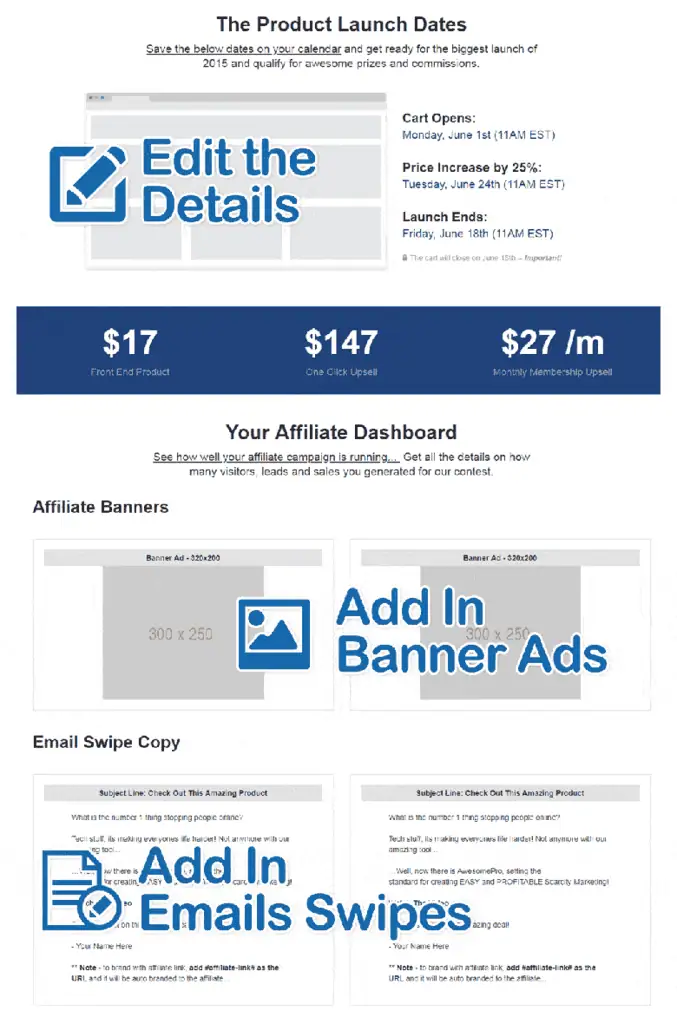
Backpack is ClickFunnels’ built-in affiliate management tool.

It allows you to create and manage your own affiliate program directly inside the platform.

And affiliate marketing, when done properly, is incredibly powerful.

Why?

Because it lets you scale revenue without directly increasing your workload or ad spend.

Instead of doing all the promotion yourself, you allow affiliates to promote your product in exchange for a commission. You only pay when a sale is made — which makes it performance-based marketing.

The tool itself is fairly straightforward:

  • Set commission structures

  • Generate affiliate links

  • Track sales and payouts

I’ve seen some users mention limitations or minor issues, but personally, I haven’t run into any major problems.

For businesses looking to expand reach without taking on more operational complexity, Backpack can be a valuable addition.

Once everything is set up, you simply click “Edit Page” and start customizing the details — banner ads, promotional copy, email swipes, affiliate resources, and more.

It’s all editable inside the dashboard.

That said, I wouldn’t recommend jumping straight into every advanced feature on day one.

First, focus on mastering the fundamentals:

  • Funnel structure

  • Landing page optimization

  • Basic integrations

Once you’re comfortable with those, then explore the more advanced tools.


Other ClickFunnels Features

Beyond the core funnel builder, there are several additional features that can enhance your marketing efforts:

  • A/B Testing – Test different headlines, layouts, or entire pages to see what converts best.

  • Social Contact Profiles – Organize and track contact activity inside your funnels.

  • Sales Process Optimization Tools – Identify drop-off points and improve conversions.

  • ClickPops – Pop-ups triggered by specific user actions.

  • ClickOptins – One-click opt-in functionality for easier lead capture.

  • Helpful Facebook Community – Large user group for support, strategies, and troubleshooting.

  • Multiple Payment Gateways – Seamlessly accept payments through integrated providers.

Individually, these might not seem groundbreaking.

But together, they turn ClickFunnels from “just a page builder” into a fairly complete sales and marketing system.

You should probably take the time to actually learn how to use ClickFunnels — unless your plan is to sign up, log in, and stare at the (admittedly pretty) dashboard for three days straight with full-blown analysis paralysis.

Your call.

I’ll admit, I was a little confused in the beginning too.

  • Setting up funnels? Easy.

  • Building landing pages? Easy.

  • Adding an affiliate section? Also easy.

But understanding how everything works together — traffic, funnels, follow-ups, offers — to grow your business automatically?

That part takes strategy.


How to Get Started With ClickFunnels

Getting started is straightforward:

  1. Go to ClickFunnels.com and activate your 14-day free trial.
    (That’s where you’d insert your affiliate link.)

  2. Create your account, log in, and choose the type of funnel you want to build.

  3. The platform guides you step by step, so you’re not starting from a blank screen.

Once inside, your first focus should be:

  • Choosing a goal (Lead generation, sales, webinar, etc.)

  • Selecting a pre-built funnel template

  • Customizing the landing pages

  • Connecting your payment gateway or email tool

  • Testing everything before going live

That’s it.

Don’t overcomplicate it in the beginning. Get one simple funnel working first — then optimize.

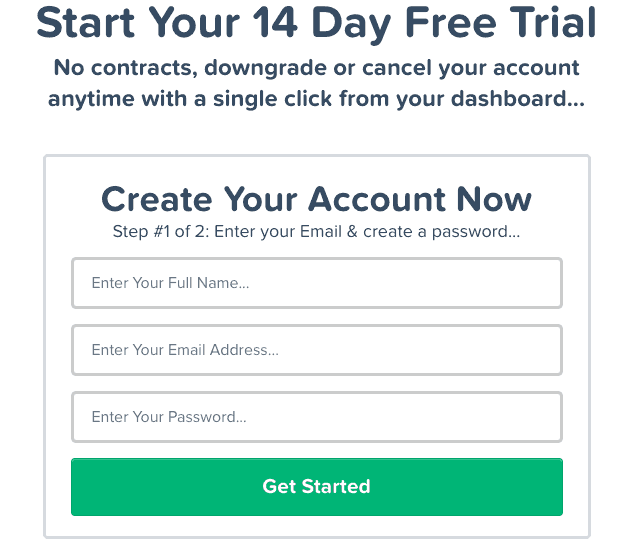
In the next step you have to “create an account” by giving your basic details

Then, you enter your card details (don’t worry — your card won’t be charged during the trial), and you’re good to go.

You now have 14 days to test the platform and decide whether ClickFunnels is the right fit for your business.

No long-term commitment upfront.


After You Sign Up

Once you log in, you’ll notice a few useful features inside the ClickFunnels dashboard:

  • ClickFunnels Game – A short, interactive funnel-building tutorial to help you get familiar with the basics.

  • The ClickFunnels Dashboard – The central control panel where you manage funnels, contacts, integrations, and analytics.

  • Live Contact Activity – Real-time tracking of what your leads are doing across your funnels.

  • Favorite Funnels – Quick access to the funnels you use most often.

You’ll also see:

  • Main Menu

  • Account Profile Settings

  • Help Menu

  • Backpack (Affiliate management, depending on your plan)

  • Actionetics (Email automation, depending on your plan)

It’s all fairly organized and straightforward once you spend a few minutes exploring.

Now, let’s talk about the funnels themselves

Before we jump into setting up a sales funnel inside ClickFunnels, it’s important to understand how a funnel actually works.

Because tools don’t make money. Strategy does.


The 4 Stages of a Sales Funnel (AIDA Model)

  1. Awareness

    This is the top of the funnel.

You use ads, SEO, social media, YouTube, or content marketing to attract targeted visitors.

At this stage, people may not know who you are yet. Your goal is simple:

  • Make them aware that you exist

  • Show that you might have a solution to their problem

You’re not selling hard here. You’re grabbing attention.


  1. Interest

    Now the visitor is curious.

They’ve clicked your ad, read your post, or opted into your lead magnet. Maybe you’ve captured their email address or phone number.

This is where you start educating them. You send:

  • Helpful emails

  • An ebook

  • A webinar

  • Case studies

  • Value-driven content

The goal here is to build trust and position yourself as the logical solution.


  1. Desire

    This is where many beginners get it wrong.

  • Interest is curiosity.

  • Desire is emotional commitment.

At this stage, the prospect doesn’t just understand your product — they want it.

You’ve shown:

  • Benefits

  • Results

  • Testimonials

  • Social proof

  • Clear transformation

Now they can picture themselves using your product and experiencing the outcome.

You’re no longer convincing them that the product exists. You’re helping them imagine life with it.


  1. Action

    This is where the conversion happens.

  • They click the button

  • They enter payment details

  • They buy

Your job here is to remove friction:

  • Clear call-to-action

  • Simple checkout process

  • Guarantee

  • Urgency or scarcity

This is the money stage.


That’s how a proper funnel works:

Attention → Build Interest → Create Desire → Trigger Action

ClickFunnels is simply the tool that helps you structure this process properly.

Setting up Your Sales Funnel

Now for the moment you’ve been waiting for…

It’s time to guide visitors through their buying journey — and ideally, into your bank account.

The good news?

Setting up a sales funnel in ClickFunnels is surprisingly simple.

You have two options:

  • Classic Mode

  • Cookbook Mode

Let’s break them down.


Step 1: Classic Mode

Think of Classic Mode as cooking without a recipe.

You decide what you want to make, gather your own ingredients, and build everything step by step.

Here’s how it works:

  1. Choose your Goal (Collect Emails, Sell a Product, Host a Webinar, etc.)

  2. Select a Funnel Type

  3. Click Build Funnel

From there, you manually choose templates for each page in your funnel:

  • Opt-in Page

  • Thank You Page

  • Sales Page

  • Order Form

  • Upsell Page

After selecting templates, you customize each page using the drag-and-drop editor.

If this feels overwhelming at first, don’t stress.

ClickFunnels provides a built-in Launch Checklist — basically your “ingredient list” — that walks you through what needs to be completed before going live.


Step 1A: Cookbook Mode

Now let’s talk about the easier option:

Cookbook Mode is for beginners who prefer a proven recipe instead of experimenting from scratch.

And honestly, there’s nothing wrong with following a recipe created by experienced marketers — especially for your first funnel.

Here’s how Cookbook Mode works:

  1. Open the Funnel Cookbook

  2. Select your Industry

  3. Choose the Type of Funnel

  4. Choose your Goal

  5. Review the suggested funnel structure

  6. Select a Free or Paid Template

  7. Import the funnel into your account

That’s it.

The structure is already mapped out. You just customize it.


Step 2: Add Integrations & Customizations

Once your funnel structure is ready, it’s time to connect the essentials.

Typically, that includes:

  • Email marketing integration

  • Payment gateway integration

  • Custom domain setup

  • Affiliate setup (via Backpack, if applicable)

After that, you simply:

  • Add your content

  • Insert your product details

  • Set pricing

  • Test the funnel

And you’re live.

ClickFunnels is built to minimize technical friction.

Is there a learning curve in understanding marketing strategy? Yes.

But from a technical standpoint, the platform itself is very beginner-friendly.

This overview is basic, but it shows how fast you can go from idea to live funnel:

Choose a template.
Add content.
Insert your product.
Connect payments.

Now you have a working sales funnel — whether you’re selling:

  • Online courses

  • Physical products

  • Services

  • Memberships

  • Communities

  • Or almost any other business model


Want to Level Up?

Start running A/B tests between different versions of your pages and funnels.

  • Optimize headlines

  • Test offers

  • Improve conversions

That’s when things start getting interesting.


PRO TIP

Never forget to set up a follow-up email sequence.

Most sales don’t happen on the first visit.

The real money is often in the follow-up.

People constantly ask about ClickFunnels pricing:

  • “Is it actually worth it?”

  • “Why is it so expensive?”

  • “Should I upgrade?”

  • “Do you have a discount?”

Let me say this upfront.

If you’re only focused on cost instead of return, that’s a dangerous mindset for any entrepreneur.

Yes, ClickFunnels starts at around $100 per month.
Yes, it’s a recurring monthly payment, not a one-time purchase.
And no, there isn’t a permanent free plan.

But here’s the better question:

What are you expecting it to replace?

ClickFunnels isn’t just a page builder. It replaces:

  • Funnel-building software

  • Landing page tools

  • Basic email automation

  • Split-testing tools

  • Checkout systems

  • Affiliate management (on higher plans)

If you hired a designer, developer, copywriter, and funnel strategist, you’d be spending thousands — not hundreds.

So when people say it’s expensive, I always ask: compared to what?

It’s essentially an all-in-one sales system designed to help you generate leads and sales automatically.

And remember — you get a 14-day free trial to test everything before committing.

Now, let’s break down the actual pricing tiers so you can decide what makes sense for your business.

ClickFunnels Pricing – The Most Talked About Part

The Pricing

(And no, it hasn’t changed. And probably won’t.)

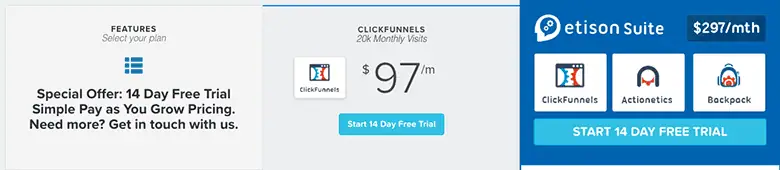
ClickFunnels costs $97 per month for the Basic plan.

If you want the BOSS version ( Etison Suite ), that will cost you $297 per month.

Let me be very clear about something:

I DO NOT recommend the Etison Suite for new entrepreneurs or solo business owners.

It’s overkill.

You’ll bleed money for months trying to “figure everything out” instead of just making sales.

However…

If you’re running a marketing agency, managing multiple sites, or scaling aggressively — then YES, Etison Suite is absolutely worth it.

Having one platform to:

  • Build funnels

  • Send emails

  • Run affiliate programs

  • Manage contacts

…is incredibly powerful at scale.

For most people though?

The $97 Basic Plan is more than enough to start.


What You Get With the $97 Basic Plan

  • A/B Testing

  • 20 Funnels

  • 100 Funnel Pages

  • 20,000 Visitors

  • 3 Custom Domains

  • Email Marketing Integrations

  • Webinar, Membership & Opt-in Funnels

  • Upsells & Downsells

Looks like a lot, right?

It is.

But once you start scaling traffic across multiple funnels, 20,000 visitors disappears fast.

If you’re running ads or multiple sites, you’ll feel the limit.


What You Get With Etison Suite ($297/m)

The biggest upgrades include:

  • Unlimited funnels, pages, visitors & domains

  • Actionetics (Visual email builder + automation + analytics)

  • Backpack (Full affiliate management system)

  • 3 SMTP integrations

  • 3 billing integrations per type

This is where ClickFunnels becomes a full marketing machine — not just a funnel builder.

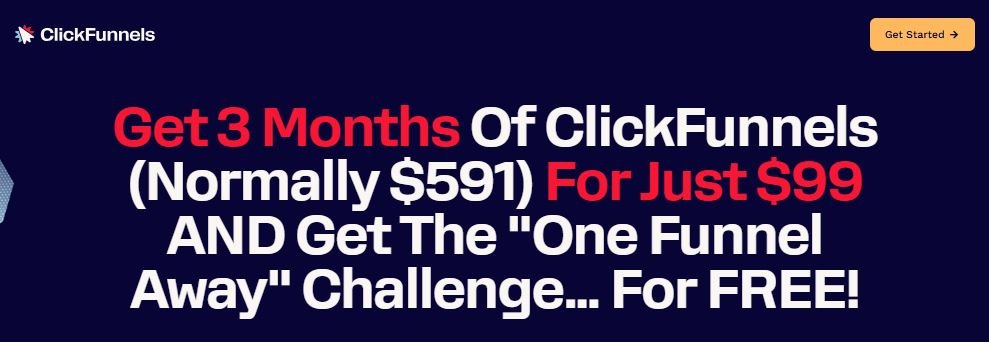
ClickFunnels is offering a limited-time deal: get 3 months of access (normally $591) for just $99. This is a great low-risk opportunity for entrepreneurs who want to build funnels, generate leads, and increase sales. You can test the full platform at a fraction of the usual cost.

ClickFunnels Review Verdict – Is It Worth It?

YES.

ClickFunnels is a complete marketing ecosystem.

You can:

  • Generate leads

  • Sell products

  • Build funnels

  • Run email automation

  • Launch affiliate programs

All from one dashboard.

Is it expensive?

Yes.

Is it worth it?

100%.

You’ll likely see that within the first week of your 14-day free trial.


What I Don’t Like About ClickFunnels

It’s not perfect.

Here’s the honest stuff.


#1 – The Editor Can Be Wonky

The page editor isn’t the most powerful on the market.

  • Sometimes widgets don’t snap exactly where you want them

  • Elements may shift slightly after alignment

Not a dealbreaker.

But worth mentioning.


#2 – The $97 Plan Feels Limited

  • 20 funnels

  • 20,000 visitors

For almost $100/month, it can feel restrictive once you grow.

Also:

  • There’s no permanent free plan

  • You only get the 14-day trial


#3 – Some Templates Are “Meh”

There are amazing templates.

But there are also some outdated-looking ones.

They work — but visually? Not always impressive.


#4 – Integrations Could Be Better

It integrates with a lot of tools.

But sometimes you’ll rely on Zapier more than you’d like — especially for certain payment gateways.

Not terrible.

Just not perfect.


ClickFunnels FAQ

Q: Is ClickFunnels Legit?
Yes. It’s a massive, well-established company with a huge user base.

Q: Is ClickFunnels a Pyramid Scheme?
No. That question doesn’t even make sense. It’s a software platform.

Q: Is There a Free Plan?
No permanent free plan. But there is a 14-day free trial with full access.

Q: How Much Does It Cost?
Either $97/m or $297/m, depending on the features you need.

Q: What Can You Do With It?
Build funnels, landing pages, email automations, affiliate programs, and sell products.

Q: Are There Alternatives?
Yes. Tools like Unbounce and InstaPage exist — but for full sales funnels, ClickFunnels is stronger.


Final Verdict – Yes or No?

If you’re serious about growing your business…

If you want predictable lead generation

If you want structured funnels instead of random pages…

ClickFunnels is worth every penny.

It’s easy.
It’s powerful.
It works.

Whenever I launch:

  • Info products

  • Online courses

  • Webinars

  • New offers

I use ClickFunnels.

If you’re ready to scale properly…

Start with the 14-day free trial and see for yourself.

This website is an independent review site and is not affiliated with, endorsed by, or sponsored by ClickFunnels or its parent company. All product names, logos, and trademarks are the property of their respective owners. Some links on this page may be affiliate links, and we may earn a commission at no additional cost to you.

© 2026 Honest Clickfunnels Review | All rights Reserved.

Try Clickfunnels FREE For 14 Days!